
In studying the varied facets of development within nations, indicators such as literacy rates, life expectancy, and the Gender Development Index (GDI) serve as critical measuring tools, providing multifaceted insights into the advancement and wellbeing of populations beyond purely economic terms.
Literacy Rates
Definition
- Literacy rates quantify the proportion of individuals within a specified age range who possess the ability to read and write within a given country, reflecting the educational attainment of the populace.
Importance
- Literacy is a foundational pillar for societal development, allowing individuals to communicate effectively, make informed decisions, and meaningfully engage within societal structures.
- Elevated literacy rates often correlate with enhanced standards of living, reduced poverty levels, and heightened levels of human development.
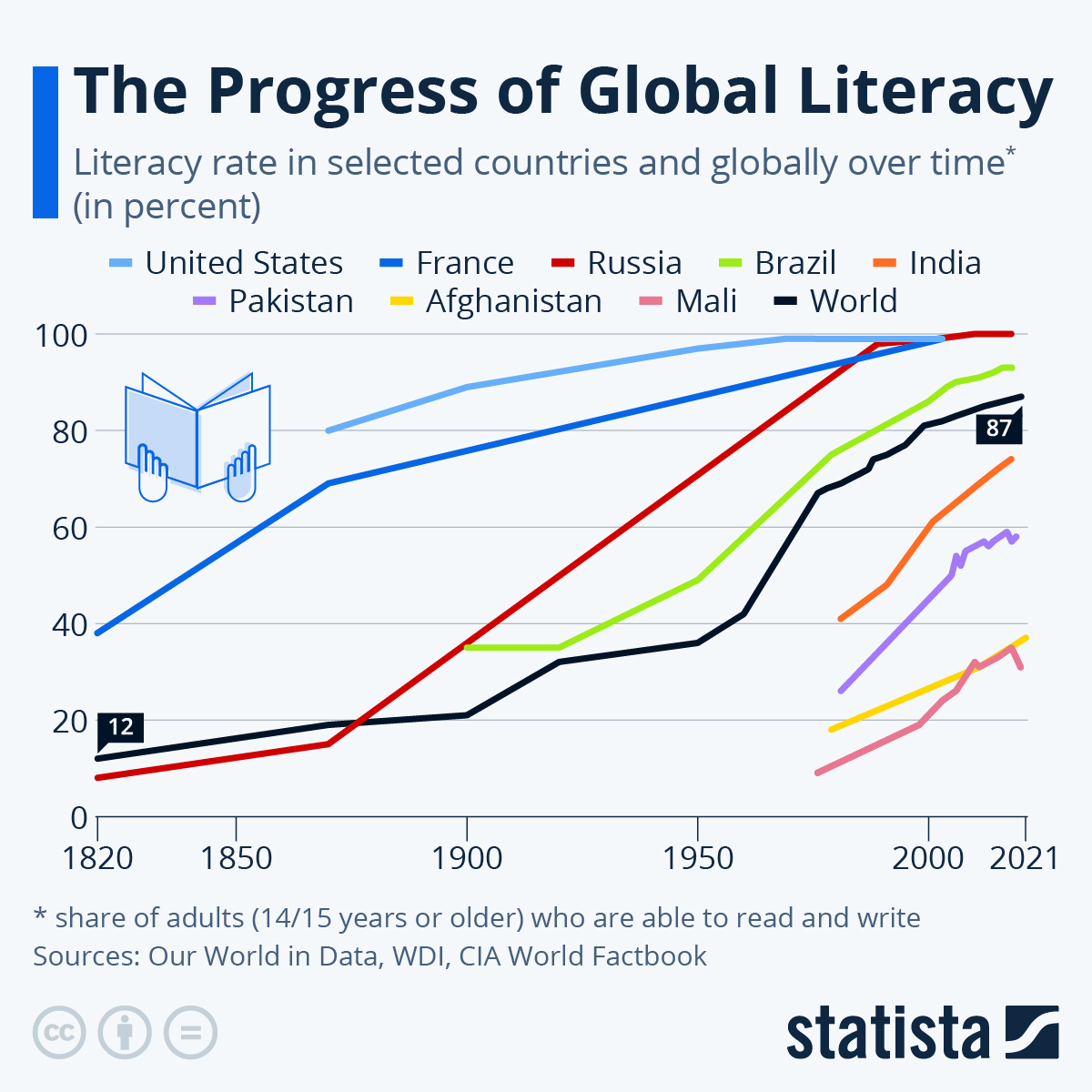
Image courtesy of statista
Factors Influencing Literacy Rates
Practice Questions
FAQ
While both the Gender Development Index (GDI) and the Gender Inequality Index (GII) are tools for assessing gender-related disparities, they utilise different parameters and serve distinct purposes. The GDI concentrates on evaluating gender inequalities in terms of lifespan, knowledge, and standard of living, reflecting disparities in potential human development. Conversely, the GII analyses gender inequalities in three dimensions: reproductive health, empowerment, and labour market participation. While GDI focuses on potential development disparities, GII evaluates the harmful aspects of unequal distribution of achievements between men and women.
Life expectancy is a valuable indicator reflecting the average lifespan of individuals within a population, providing insights into the overall health and living conditions. However, relying solely on life expectancy can be misleading as it does not account for the quality of life, prevalence of diseases, access to healthcare, and individual lifestyles. For a comprehensive assessment of a population’s health, it is crucial to consider various indicators such as morbidity rates, access to healthcare services, and prevalence of health risk factors, alongside life expectancy, to procure an encompassing understanding of public health conditions.
Advancements in development indicators like literacy rates, gender equality, and life expectancy are integral to achieving the Sustainable Development Goals (SDGs). For instance, improving literacy rates aligns with SDG 4, Quality Education, enabling populations to acquire knowledge and skills needed to promote sustainable development. Enhanced Gender Development Index supports SDG 5, Gender Equality, promoting empowerment of all women and girls. Elevated life expectancy correlates with SDG 3, Good Health and Well-being, reflecting improved public health. Thus, progress in these indicators is synonymous with societal advancement, economic stability, and environmental sustainability, crucial components for fulfilling the SDGs.
While economic indicators like GDP are critical for assessing a country’s economic health, relying solely on them can overlook multifaceted aspects of development. Enhancing other development indicators such as literacy rates and life expectancy is vital for developing countries as they provide insights into societal well-being, education attainment, and health conditions. Improved literacy rates and health indicators often lead to a more informed, healthy, and productive workforce, fostering sustainable economic growth. Additionally, focusing on multidimensional indicators ensures balanced and inclusive development, addressing inequalities and enhancing overall quality of life.
Literacy rates are pivotal for economic and societal advancement. High literacy rates propel economic progression as they equip individuals with skills needed for a diversified and competent workforce, fostering innovation and productivity. For instance, a well-educated workforce can adapt quickly to new technologies and optimise resource allocation, driving economic growth. Concurrently, elevated literacy levels enhance societal well-being, as educated individuals tend to make informed decisions regarding health, finance, and lifestyle, contributing to social cohesion, reduced crime rates, and improved overall quality of life.